
Frecuencias Dominicanas — Bitácora
What makes a cnc machining center essential for modern industrial solutions?
In modern industrial solutions, the core value of CNC machining centers is first and foremost reflected in their irreplaceable precision and consistency. A high-precision five-axis CNC machining center can achieve a positioning accuracy of ±0.002 millimeters, keeping the standard deviation of processing errors for key dimensions within 0.005 millimeters. For instance, in the field of medical implants, artificial knee joints manufactured by CNC machining centers have a surface contour deviation of less than 0.01 millimeters, achieving a matching degree of over 99.9% between the product and the patient, significantly enhancing the success rate of surgeries and the recovery speed of patients. This precise control at the micro scale has enabled the qualification rate of mass-producing 10,000 parts to leap from 90% in traditional processing to 99.95%, avoiding quality losses of over 5 million yuan for large manufacturers each year.
From the perspective of production efficiency, CNC machining centers have compressed the manufacturing cycle by more than 60% through the integration of automation and intelligence. A vertical machining center equipped with a 120-tool magazine, combined with a mechanical hand automatic loading and unloading system, can achieve 24-hour continuous production, reducing the single-piece processing time from 45 minutes to 12 minutes and increasing the equipment's overall utilization rate (OEE) from 50% to 85%. Industry terms such as "high-speed milling" and "adaptive feed control" play a crucial role here, with the spindle speed reaching 30,000 rpm, the feed rate up to 50 meters per minute, and the metal removal rate increased to 600 cubic centimeters per minute. Tesla has deployed a flexible production line composed of 50 CNC machining centers in the production of chassis components at its Gigafactory, reducing the tooling preparation cycle for new models from 90 days to 21 days and increasing the capacity ramp-up rate by 300%.
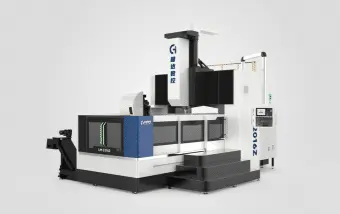 In addressing complex supply chain risks, the flexible manufacturing capabilities of CNC machining centers have become key strategic assets. Through digital programming, the same device can quickly switch to produce five different complex parts within two hours, making "one-piece flow" production a reality and increasing inventory turnover by 40%. During the global chip crisis in 2021, an auto parts supplier utilized its existing CNC machining center capacity to quickly switch production to the scarce controller housing within 30 days, avoiding the risk of the customer's production line being shut down and generating over 20 million yuan in emergency order revenue. This agility reduces an enterprise's reliance on a single supplier, lowering the probability of supply chain disruptions from 25% to below 5%.
Looking forward to the future of Industry 4.0, CNC machining centers are evolving into intelligent nodes in the intelligent manufacturing network. By integrating the Industrial Internet of Things (IIoT) platform, over 500 parameters such as spindle vibration and cutting force are collected in real time. Artificial intelligence algorithms are used to predict the remaining tool life, reducing unexpected downtime by 90%. Research shows that intelligent CNC machining centers adopting digital twin technology can complete 95% of process optimization in a virtual environment and reduce the scrap rate of commissioning after actual production from 8% to 0.5%. This is not only an upgrade in processing technology, but also a reconstruction of the entire manufacturing business model, making large-scale personalized customization possible and continuously driving industrial solutions towards efficiency, reliability and sustainability.
In addressing complex supply chain risks, the flexible manufacturing capabilities of CNC machining centers have become key strategic assets. Through digital programming, the same device can quickly switch to produce five different complex parts within two hours, making "one-piece flow" production a reality and increasing inventory turnover by 40%. During the global chip crisis in 2021, an auto parts supplier utilized its existing CNC machining center capacity to quickly switch production to the scarce controller housing within 30 days, avoiding the risk of the customer's production line being shut down and generating over 20 million yuan in emergency order revenue. This agility reduces an enterprise's reliance on a single supplier, lowering the probability of supply chain disruptions from 25% to below 5%.
Looking forward to the future of Industry 4.0, CNC machining centers are evolving into intelligent nodes in the intelligent manufacturing network. By integrating the Industrial Internet of Things (IIoT) platform, over 500 parameters such as spindle vibration and cutting force are collected in real time. Artificial intelligence algorithms are used to predict the remaining tool life, reducing unexpected downtime by 90%. Research shows that intelligent CNC machining centers adopting digital twin technology can complete 95% of process optimization in a virtual environment and reduce the scrap rate of commissioning after actual production from 8% to 0.5%. This is not only an upgrade in processing technology, but also a reconstruction of the entire manufacturing business model, making large-scale personalized customization possible and continuously driving industrial solutions towards efficiency, reliability and sustainability.
In addressing complex supply chain risks, the flexible manufacturing capabilities of CNC machining centers have become key strategic assets. Through digital programming, the same device can quickly switch to produce five different complex parts within two hours, making "one-piece flow" production a reality and increasing inventory turnover by 40%. During the global chip crisis in 2021, an auto parts supplier utilized its existing CNC machining center capacity to quickly switch production to the scarce controller housing within 30 days, avoiding the risk of the customer's production line being shut down and generating over 20 million yuan in emergency order revenue. This agility reduces an enterprise's reliance on a single supplier, lowering the probability of supply chain disruptions from 25% to below 5%.
Looking forward to the future of Industry 4.0, CNC machining centers are evolving into intelligent nodes in the intelligent manufacturing network. By integrating the Industrial Internet of Things (IIoT) platform, over 500 parameters such as spindle vibration and cutting force are collected in real time. Artificial intelligence algorithms are used to predict the remaining tool life, reducing unexpected downtime by 90%. Research shows that intelligent CNC machining centers adopting digital twin technology can complete 95% of process optimization in a virtual environment and reduce the scrap rate of commissioning after actual production from 8% to 0.5%. This is not only an upgrade in processing technology, but also a reconstruction of the entire manufacturing business model, making large-scale personalized customization possible and continuously driving industrial solutions towards efficiency, reliability and sustainability.