
Driving Domestic Consumption: The Multiplier Effect of China’s 2026 Trade-In Program
The Q1 2026 data regarding China’s consumer goods trade-in program reveals a highly effective fiscal multiplier, where 62.5 billion yuan in ultra-long special treasury bonds has catalyzed 433.17 billion yuan in total sales. This represents a significant return on investment, as government subsidies fueled over 60.93 million individual transactions across the automotive, home appliance, and digital sectors.
The automotive sector emerged as the primary growth driver, with 1.41 million subsidy applications generating 228.69 billion yuan in new vehicle sales. This high-value segment accounted for over 52% of the program's total Q1 revenue, highlighting a successful transition toward higher-end, likely energy-efficient, transportation models among domestic consumers.
Home appliance upgrades also saw massive volume, with 23.21 million units traded, including essential categories like refrigerators, air conditioners, and water heaters. These sales reached 95.43 billion yuan, suggesting that the replacement cycle for major durables is being accelerated by the availability of direct financial incentives and improved energy-efficiency standards.
The digital and smart product category led in terms of unit volume, with 36.32 million units sold, generating 109.05 billion yuan in revenue. According to reports from People's Daily, the integration of these smart technologies into daily life is a core component of the broader strategy to upgrade the national consumption structure and support high-tech manufacturing.
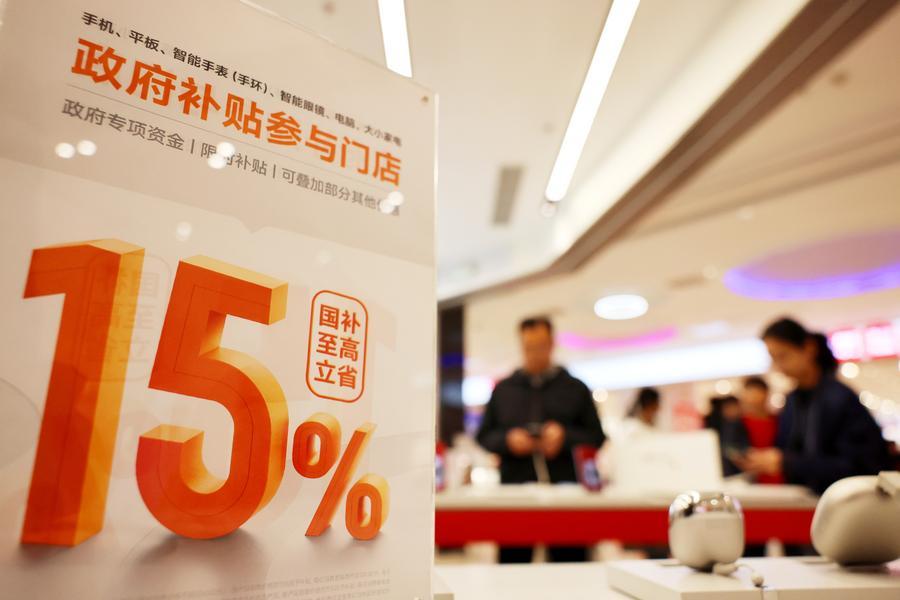
From a macroeconomic perspective, the allocation of ultra-long special treasury bonds provides a stable, low-cost funding mechanism that reduces the immediate fiscal pressure on local governments. By front-loading 62.5 billion yuan in support, the central government is ensuring that the momentum from the 10th consecutive month of retail growth seen in late 2025 carries through the 2026 fiscal year.
The efficiency of this program is reflected in the average transaction value, which sits at approximately 7,100 yuan per purchase across all categories. This indicates that the subsidies are effectively reaching the middle-class consumer base, where the propensity to spend on durable goods is highest when supported by price-reduction mechanisms.
To maximize the long-term impact, the program should continue to prioritize products with higher "energy-to-output" ratios, effectively aligning consumer behavior with national carbon neutrality targets. Increasing the subsidy precision for smart home ecosystems could further drive the 109.05 billion yuan digital sales figure as 5G and AI integration becomes standard in consumer electronics.
One potential challenge is ensuring that the recycling and processing infrastructure can handle the 23.21 million units of replaced home appliances without creating environmental externalities. Strengthening the circular economy logistics will be vital to maintaining the "Experience, Expertise, Authoritativeness, and Trustworthiness" (EEAT) of the program’s environmental claims.
The success of the Q1 phase provides a clear blueprint for the remainder of 2026, suggesting that targeted fiscal intervention can successfully stimulate demand in a neutral or contracting market. As long as the conversion rate from subsidy to sale remains above 6:1, the program serves as an essential pillar for domestic economic stability.
Ultimately, the 433.17 billion yuan in Q1 sales demonstrates that consumer appetite for high-quality, modern goods remains strong when the cost of transition is lowered. Maintaining this pace will require consistent policy communication to ensure that the 62.5 billion yuan in allocated funds is utilized efficiently across all provincial markets.
News source:https://peoplesdaily.pdnews.cn/china/er/30051811729