
Designing a High-Capacity Solar Storage System for Three-Phase Loads
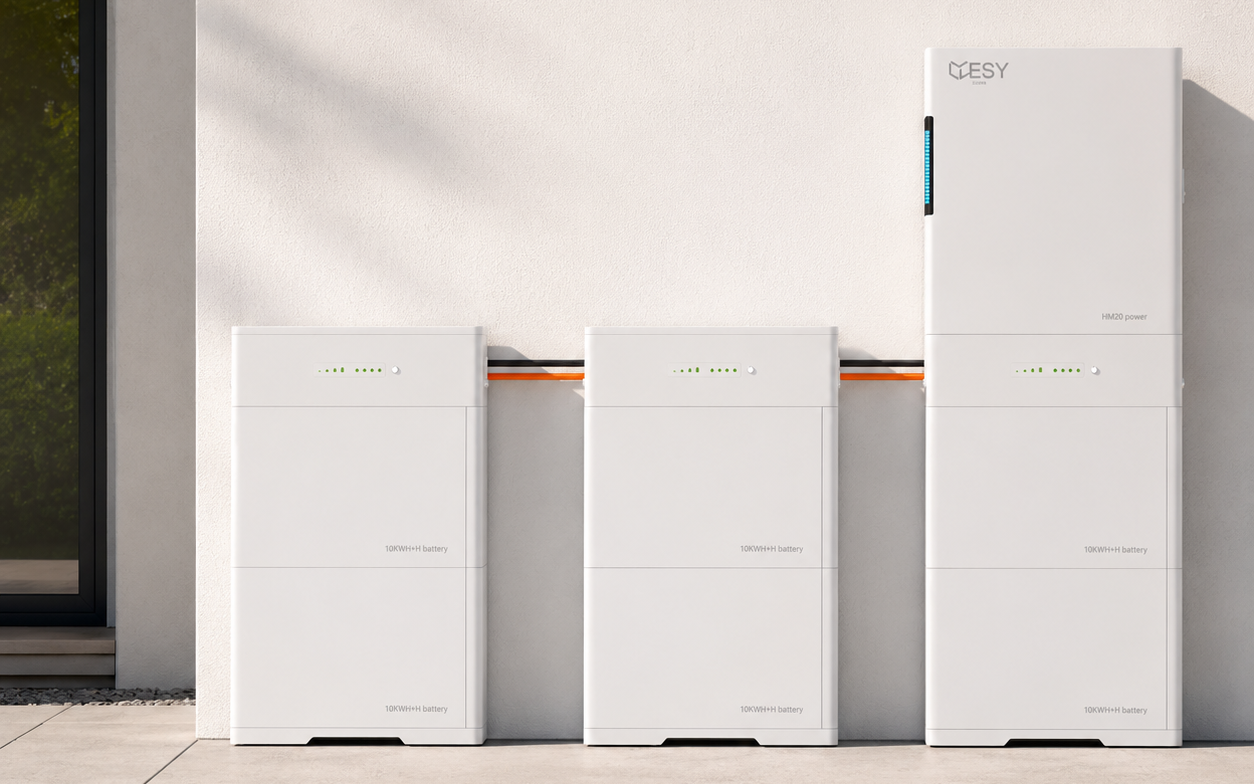
A high-capacity solar storage system for three-phase loads combines a properly sized PV array, battery bank, and three-phase inverter to support commercial buildings, farms, and large homes. A typical design uses 20–100 kW inverter capacity with 50–300 kWh battery storage, achieving 85–95% round-trip efficiency and maintaining stable power for motors, HVAC systems, workshops, and other three-phase equipment.
Three-phase solar storage systems are designed for locations where electrical demand exceeds the capability of standard residential setups. In 2025, many commercial energy storage installations adopted lithium iron phosphate (LFP) batteries because they provide more than 6,000 charge cycles at 80% depth of discharge while maintaining stable thermal performance. A system with a 30 kW three-phase inverter and 150 kWh battery can support daily energy use, peak demand reduction, and backup operation without depending entirely on grid supply.
A three-phase storage system must match power output, battery discharge capability, and load characteristics at the same time. Increasing battery size alone does not solve insufficient inverter capacity or poor load matching.
The design process starts with load analysis because three-phase equipment has different requirements from ordinary household appliances. Motors, compressors, pumps, and industrial tools often require short-term surge power that can reach 200–500% of rated current during startup.
| Equipment | Typical power range | Design consideration |
|---|---|---|
| HVAC systems | 5–50 kW | High startup current |
| Water pumps | 3–30 kW | Requires surge support |
| Workshop machines | 10–100 kW | Variable operating periods |
| EV charging equipment | 11–150 kW | Long continuous operation |
For example, a facility operating a 25 kW average load may not be suitable for a 25 kW inverter. A 35–40 kW inverter may provide better performance because it can handle temporary current increases while maintaining three-phase voltage balance.
After determining power demand, battery capacity is calculated according to energy consumption and backup time. A building using 80 kWh per day with a requirement for 10 hours of backup may need more than 100 kWh of installed storage because usable energy is reduced by depth of discharge limits and conversion losses.
A common calculation approach considers:
-
Daily energy consumption: 120 kWh
-
Required backup duration: 8–12 hours
-
Battery usable depth: 90%
-
System efficiency: 90–95%
For a 180 kWh energy requirement, a battery system may need approximately 210–220 kWh installed capacity to provide the expected output. Modern LFP batteries normally operate between 10% and 90% state of charge to extend service life, allowing many systems to achieve 10–15 years of operation.
Battery selection affects long-term performance. LFP chemistry is widely used in large storage applications because of its high cycle capability, stable operation, and lower thermal risk compared with older lithium chemistries. A typical commercial battery module includes multiple cells connected with a battery management system that monitors voltage, temperature, and current.
| Battery parameter | Typical range |
|---|---|
| Cell cycle life | 6,000–10,000 cycles |
| Round-trip efficiency | 85–95% |
| Operating temperature | -10°C to 50°C |
| Module voltage | 100–500 V |
| System voltage | 400–1,000 V |
The battery management system controls charging and discharging based on cell conditions. When temperatures rise above recommended limits or individual cell voltage differences increase, charging current is reduced to protect battery reliability.
Solar array sizing determines how much energy the system can collect throughout the year. Many installations use photovoltaic oversizing because solar production varies by season, weather, and operating hours.
A common configuration includes:
| System size | PV capacity | Battery capacity |
|---|---|---|
| Small commercial | 15–30 kW | 50–100 kWh |
| Medium facility | 30–60 kW | 100–250 kWh |
| Large property | 60–150 kW | 250–500 kWh |
A 50 kW inverter may be paired with a 60–75 kW solar array, creating a PV oversizing ratio of approximately 120–150%. This approach improves energy collection during mornings, afternoons, and cloudy periods because the solar array reaches useful output more frequently.
The inverter connects solar generation, battery storage, and AC loads into one coordinated system. Three-phase hybrid inverters commonly operate at 400 V or 480 V AC depending on regional electrical standards.
Important inverter specifications include:
| Parameter | Typical value |
|---|---|
| Rated output | 20–100 kW |
| Conversion efficiency | 95–98% |
| MPPT range | 200–1,000 V DC |
| Backup switching | Less than 20 ms |
| Phase balance accuracy | Above 95% |
A three-phase inverter must distribute power evenly among three AC lines. Poor phase balance can create voltage differences and reduce equipment performance, especially when operating motors or sensitive electronic systems.
Solar energy is normally used first by connected loads, then stored in batteries, while remaining electricity can be exported or reduced depending on grid conditions.
During daylight hours, the operating sequence is:
-
PV panels generate DC electricity.
-
The inverter converts DC power into three-phase AC.
-
Loads consume available solar energy.
-
Excess generation charges the battery.
-
Stored energy becomes available for later use.
At night or during grid interruption, the battery supplies energy through the inverter. This operating method is also used in whole-home battery storage systems, where the storage unit supports household circuits, high-power appliances, and essential electrical equipment.
Backup performance depends on both battery capacity and inverter output. A 200 kWh battery connected to a 20 kW inverter can theoretically provide energy for many hours, but it cannot supply loads requiring more than 20 kW at the same time.
System protection is required for high-capacity installations. Storage systems normally include DC disconnects, AC breakers, surge protection devices, grounding systems, thermal sensors, and communication interfaces.
Common protection functions include:
| Protection function | Purpose |
|---|---|
| Overcurrent protection | Prevents excessive current flow |
| Voltage monitoring | Maintains safe operating range |
| Thermal management | Controls battery temperature |
| Ground fault detection | Identifies electrical leakage |
| Grid synchronization | Maintains stable connection |
Standards such as UL 9540, UL 1741, and IEC 62619 are widely referenced for battery energy storage safety and inverter operation. Systems installed after 2020 increasingly include remote monitoring platforms that collect operating data from batteries, solar panels, and inverters.
Economic performance depends on electricity prices, solar production, and battery cycling frequency. Commercial facilities often use storage to reduce peak electricity demand because demand charges can account for 30–50% of monthly electricity costs in some markets.
For example, a facility with a 60 kW peak demand may discharge batteries during expensive peak hours and recharge using solar generation during daytime periods. If the system reduces peak demand by 20 kW for 200 operating days per year, the reduction in electricity charges can significantly affect payback time.
Energy management software improves system operation by controlling charging schedules, load priorities, and grid interaction. Modern systems can automatically select between solar power, battery power, and grid electricity based on electricity rates and battery status.
| Operating condition | Preferred energy source |
|---|---|
| Strong sunlight | Solar generation |
| Excess solar production | Battery charging |
| Evening demand | Battery discharge |
| Grid outage | Battery backup |
| Low battery level | Grid charging |
Three-phase solar storage is increasingly used in large homes, agricultural properties, offices, and small commercial facilities because it supports higher power demand than single-phase systems. A correctly sized installation balances solar production, battery storage, inverter capability, and electrical loads.
By 2030, global energy storage installations are expected to continue expanding as renewable generation increases and more buildings require flexible electricity management. High-capacity three-phase systems will remain an important solution for properties that need stable power supply, lower grid dependence, and reliable operation of high-power equipment.